
Vitamin D3 and K2 are two essential nutrients that work in harmony to support bone strength, cardiovascular health, and overall well-being.
What D3 and K2 Do in the Body?
Vitamin D3 and K2 play complementary roles in maintaining balance within the body. D3 increases calcium absorption from food, while K2 activates proteins that guide calcium into bones and teeth.
- Vitamin D3 Functions – Enhances calcium absorption, supports immune system, regulates mood.
- Vitamin K2 Functions – Directs calcium to bones, prevents arterial calcification, supports dental health.
- Synergy – Together, they optimize bone density and cardiovascular protection.
- Hormonal Support – D3 influences hormone regulation, while K2 aids metabolic balance.
By combining these nutrients, the body achieves a healthier calcium distribution, ensuring strong bones and a resilient cardiovascular system.
Recommended Daily Intake by Age
The daily requirements for Vitamin D3 and K2 vary depending on age, lifestyle, and health status. Children, adults, and seniors all have different needs due to bone growth, hormonal changes, and age-related decline.
- Infants (0–12 months) – 400 IU of D3; small amounts of K2 from diet.
- Children (1–13 years) – 600–800 IU of D3; K2 from dairy, eggs, or supplements.
- Teenagers (14–18 years) – 800–1000 IU of D3; K2 supports bone development.
- Adults (19–50 years) – 1000–2000 IU of D3; 90–120 mcg of K2.
- Seniors (51+ years) – 2000 IU or more of D3; higher K2 intake for bone and heart health.
Meeting these intake levels helps prevent deficiencies that can lead to weak bones, poor immunity, or cardiovascular issues. Seniors especially benefit from higher doses due to reduced natural vitamin production.
Top Vitamin D3 and K2 Supplements to Consider
Selecting supplements with both vitamins reduces the risk of imbalance. Always check labels for dosage accuracy and purity, ensuring they meet your daily needs without exceeding safe limits.
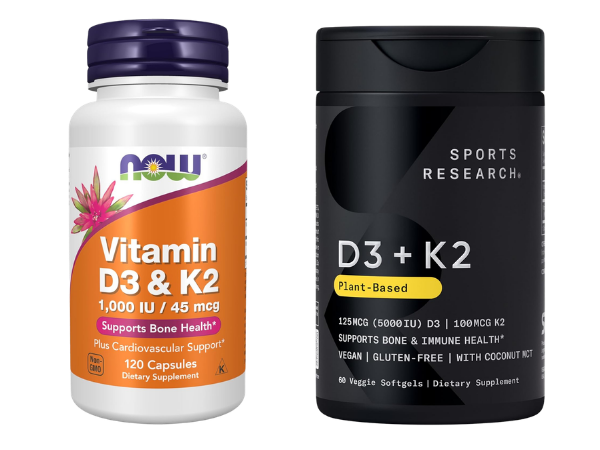
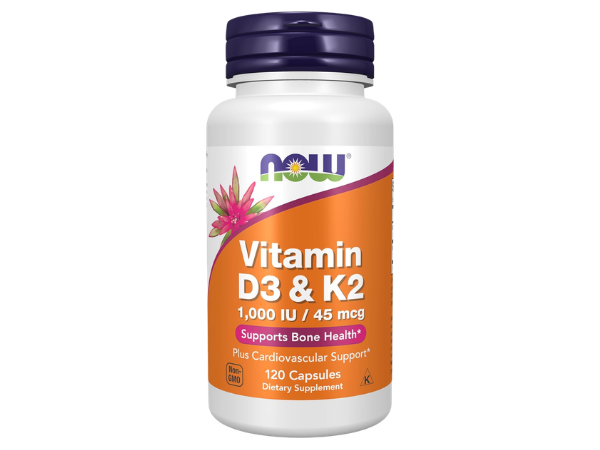
NOW Foods Vitamin D‑3 & K‑2
The NOW Foods Vitamin D‑3 & K‑2 supplement is a balanced formula designed to support bone strength and cardiovascular health. It combines a moderate dose of Vitamin D3 with MK‑7, the most bioavailable form of Vitamin K2.
Defining features of NOW Foods Vitamin D‑3 & K‑2:
- Balanced Formula – 1,000 IU of D3 with 45 mcg of MK‑7.
- Bone Support – Enhances calcium absorption and bone mineralization.
- Cardiovascular Benefits – Helps prevent arterial calcification.
- Trusted Brand – Produced by NOW Foods, known for quality supplements.
This supplement is ideal for individuals seeking a moderate daily intake of D3 and K2, especially those who want a reliable, well‑balanced option for long‑term health maintenance.
Sports Research Vitamin D3 + K2
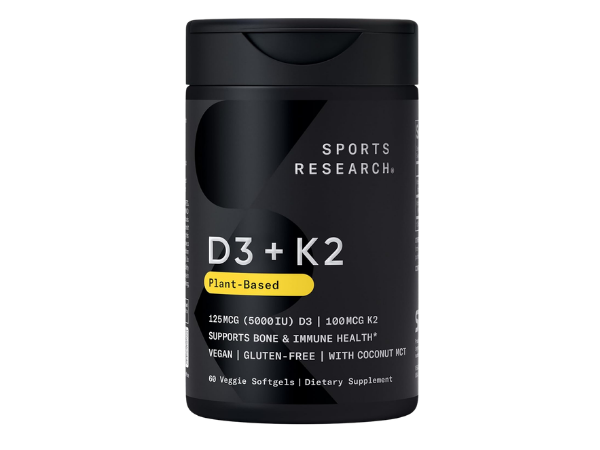
The Sports Research Vitamin D3 + K2 supplement is one of the most popular choices among consumers, offering a potent combination of D3 and MK‑7 in a softgel format.
Defining features of Sports Research Vitamin D3 + K2:
- Potent Combination – High‑quality D3 paired with MK‑7.
- Enhanced Absorption – Softgels infused with coconut oil.
- Bone & Heart Health – Supports calcium regulation and cardiovascular function.
- Non‑GMO Verified – Ensures purity and safety.
This supplement is best suited for those who want a potent, well‑absorbed formula that has a strong reputation in the wellness community.
Doctor’s Best Vitamin D3 + K2
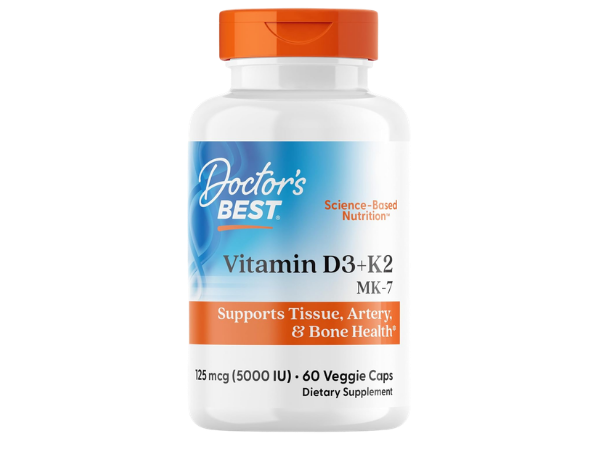
The Doctor’s Best Vitamin D3 + K2 supplement is designed to deliver a synergistic blend of D3 and MK‑7 for comprehensive bone and cardiovascular support.
Defining features of Doctor’s Best Vitamin D3 + K2:
- Science‑Based Formula – Developed with research‑backed dosages.
- Synergistic Blend – D3 enhances calcium absorption, K2 directs it to bones.
- MK‑7 Form – Long‑acting and highly bioavailable.
- Trusted Brand – Doctor’s Best is known for evidence‑driven supplements.
This supplement is ideal for individuals who value research‑driven formulations and want a reliable product that supports both bone density and cardiovascular health.
Dosage Guidelines Based on Weight
Weight is one of the most important factors in determining how much Vitamin D3 your body requires. Since Vitamin D3 is fat‑soluble, individuals with higher body mass often need larger amounts to maintain optimal blood levels.
- Under 50 kg – 1000 IU of D3 daily; standard K2 intake.
- 50–70 kg – 1500 IU of D3; moderate K2 supplementation.
- 70–90 kg – 2000 IU of D3; higher K2 intake recommended.
- 90+ kg – 3000 IU or more of D3; ensure sufficient K2 balance.
- Athletes – May require increased intake due to higher metabolic demand.
Weight-based dosing ensures that Vitamin D3 levels remain stable across different body types. Pairing with K2 prevents calcium misplacement, making supplementation safer and more effective.
Factors That Can Affect Your Daily Vitamin D3 Needs
Several lifestyle and environmental factors influence how much Vitamin D3 your body requires. Sunlight exposure, diet, and health conditions all play a role.
- Sunlight Exposure – Less sun means higher supplementation needs.
- Skin Tone – Darker skin requires more D3 due to reduced synthesis.
- Dietary Intake – Limited fish, eggs, or dairy increases deficiency risk.
- Age – Older adults produce less D3 naturally.
- Medical Conditions – Obesity, kidney, or liver issues affect absorption.
Understanding these factors helps tailor supplementation to individual needs. For example, someone living in northern climates with minimal sun exposure may require higher doses year-round.
Vitamin D3 and K2: Daily Intake vs. Upper Limits
While these vitamins are essential, excessive intake can be harmful. Safe upper limits prevent toxicity while ensuring benefits.
- Vitamin D3 Upper Limit – 4000 IU daily for adults.
- Vitamin K2 Upper Limit – No established toxicity, but balance is key.
- Signs of Excess D3 – Nausea, kidney strain, calcium buildup.
- Safe Supplementation – Stay within recommended ranges unless advised by a doctor.
- Balanced Approach – Pairing D3 with K2 reduces risks of calcium misplacement.
Maintaining intake within safe boundaries ensures long-term health benefits without complications. Supplements should complement diet and lifestyle, not replace them entirely.